It's easy to evoke nostalgia of a particular type...high school, childhood, fond memories, past loves, etc. But it's not easy to evoke a generalized nostalgia for something past. That's what this mix does! Each one of these songs will tailspin you into a non-specific nostalgia to match any reminiscing you might want. Ever.
Here is how this works (assuming I have any readers ever...It's been awhile. And generally always is between posts anymore): I choose a topic and write down the first ten songs that come to mind on that topic in no particular order. Then you do the same. Easy enough, right? I give you:
Ten Songs Evoking Nostalgia
1. Oh, Mandy - The Spinto Band listen
2. Modern Man - Arcade Fire listen
3. Sweet Disposition - The Temper Trap listen
4. Swansea - Joanna Newsom listen
5. Ceremony - New Order listen
6. In This Home On Ice - Clap Your Hands Say Yeah listen
7. Tickle Me Pink - Johnny Flynn listen
8. I Was A Kaleidoscope - Death Cab For Cutie listen ---the version linked here is an acoustic version I think fits the theme pretty well, but if you've never heard the original, look it up, one of my favorite songs by this band...
9. In The Aeroplane Over The Sea - Neutral Milk Hotel listen
10. Playground Love - Air listen
Sunday, October 16, 2011

Saturday, August 06, 2011
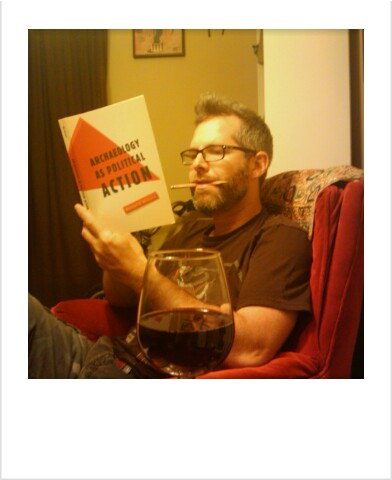
Hot Guys Reading Books
Okay, so...I know I haven't updated this blog in forever. I started a little something called "grad school" and then I was like man...it's been a long time since I updated this blog. I hemmed and hawed and assumed that in order to update said blog, I would need some kind of EPIC RETURN. I couldn't think of an epic return, so it just didn't happen. Over and over again it didn't happen. I spent 6 weeks in Russia and couldn't even be bothered to help you guys out with some posts then. I'm basically a jerk.


So to make up for it, I present you with my version of porn. It's hot guys reading books. It's what the name implies. Here are a few favorites I scrounged up from the site:


Since you need more...undoubtedly, try the site itself on for size.
Tuesday, December 28, 2010
Book Review: White Noise by Don DeLillo

I really liked this novel. Quite a lot. In fact, I would have given it 5 of 5 stars if a. I wasn't trying to be more discerning with my rating system, reserving 5's for only those novels I consider all-time favorites b. if the third and final portion of the book hadn't dragged on a bit too long. That is my only real criticism of the book, that that third part of the book is a bit too long... because the rest is pure gold.
Some people seem dissuaded by this book because it is highly regarded as the ultimate postmodern novel. And it is, really. If you have any experience with postmodern theory then there are about 10-20 different paper topics one could make from this book alone. Believe me, I did one of them in a single frenzied Sunday afternoon sitting at an IHOP during finals. It was about Hitler as a simulacrum. And I got an A, because as I said, this is rich postmodern reading, and White Noise is great fodder for any professor who loves himself a good postmodern analysis. Just mention "the most photographed barn in America" and you'll get any postmodern theorist worked up into a frenzy.
But even if you could not give less of a crap about postmodernism (and I'm sure there are plenty of you out there), this is still a great novel. Because at the crux of this novel are two themes we can all identify with: the meaning of and dissipation of the nuclear family and the fear of death. And it's put together in this witty (if sometimes hard to access) package that is genuinely a pleasure to read.
This particular version that I read was the 25th anniversary edition with an introduction by Richard Powers. Normally, I regard most introductions as either boring rehashings of plot points I want to experience for myself or monotonous statements of the most obvious, but I actually liked this introduction. It was a nice precursor to some of the novels themes and even if some of the points he makes are a bit obvious, they're useful. It sets up the novel well.
This is my third DeLillo novel, and I can see why it is regarded as his very best, even if personally I liked Libra just a bit more. DeLillo is a writer whose sense of irony and well-placed word play makes his writing seem alive and vibrant, pulsating and electric, even where the plot seemingly lags. His characters are composites of people who are so distinctly absurd that you know they probably do exist somewhere, absurdity aside. I would readily recommend this book to anyone interested in contemporary literature, and especially to students of literary theory.
That's the mark of this book's quality: you can read it for theory or you can read it for pleasure, and either reading would be equally enriching.
This review was reposted and expanded from my review at Good Reads. Oh, you love reading and reviewing books, too? Join! We can be friends!
Book Review: Minima Moralia: Reflections on a Damaged Life by Theodor Adorno

I read this book for my class on Critical Theory of the Frankfurt School. We slogged through it 10-15 aphorisms at a time for about 12 weeks, and in the end I have to say it was really rewarding. I think it would be a formidable text if we hadn't broken it down. For each section, pairs from the class presented on an aphorism or two and related it back to other sections from earlier in the book or to other Frankfurt School readings from the course. From an academic standpoint, it was a really rich text in that it encompassed so many of Adorno's ideas into clever little bits. One joke I liked to make is that Adorno speaks in a way that lends itself to the facebook status.
But I fell a few weeks behind and so had to read a big chunk of the book in a more traditional format and it was still rewarding that way as well. Adorno isn't concerned with offering solutions: only pointing out how the world is broken. "There is no right life in a wrong world." And so he is concerned with pointing out how the world is wrong, how life is damaged. It sounds depressing and this book can be pessimistic even at its best moments, but there is something hopeful in the care he takes in examining the world so closely. I would definitely recommend this book to anyone recommended in Frankfurt School theory or social theory in general.
This review was reposted and expanded from my review at Good Reads. Oh, you love reading and reviewing books, too? Join! We can be friends!
Ten Songs On A Thought: Ten Songs To Combat Postmodern Malaise
Okay, so postmodern malaise may be an exaggeration, but as someone who has been reading postmodern literature and theory for months at this point, recognizing the state that all people find themselves in whether they like it or not (a society controlled by the culture industry, surrounded by brands, the constant onslaught of technology, never lacking for inputs and signifiers, the constant fear of a world illuminated by news and maps and science and the internet, the web of a world now illuminated, etc). And it seems to me like an ever-growing number of songs reflect this frenzied discontent one feels with a world full of impulses and signs. So I decided to make one of my mixes about it.
For those who don't know, each week (theoretically. Really, it's whenever I get the impulse) I choose a topic and write down the first ten songs that come to mind on that topic in no particular order. Then you do the same. Easy enough, right? I give you:
TEN SONGS TO COMBAT POSTMODERN MALAISE
1. The Age of Adz - Sufjan Stevens listen
2. One Hit - The Knife listen
3. The Mall and Misery - Broken Bells listen
4. Ready To Start - Arcade Fire listen
5. Apres Moi - Regina Spektor listen
6. Sleepyhead - Passion Pit listen
7. Enjoy Your Worries, You May Never Have Them Again - The Books listen
8. No Ability - Dovekins listen
9. We've Got Everything - Modest Mouse listen
10. Symptom Finger - The Faint listen
For those who don't know, each week (theoretically. Really, it's whenever I get the impulse) I choose a topic and write down the first ten songs that come to mind on that topic in no particular order. Then you do the same. Easy enough, right? I give you:
TEN SONGS TO COMBAT POSTMODERN MALAISE
1. The Age of Adz - Sufjan Stevens listen
2. One Hit - The Knife listen
3. The Mall and Misery - Broken Bells listen
4. Ready To Start - Arcade Fire listen
5. Apres Moi - Regina Spektor listen
6. Sleepyhead - Passion Pit listen
7. Enjoy Your Worries, You May Never Have Them Again - The Books listen
8. No Ability - Dovekins listen
9. We've Got Everything - Modest Mouse listen
10. Symptom Finger - The Faint listen
RETURN
Okay, so once or twice a year, I make a big to-do and say I'm going to return to regular blogging. Will this one stick? I don't know, 50/50 shot. But I am trying to concentrate on something BESIDES grad schooling. Do you have any idea how hard that is? Very.
I like to imagine grad school is like giving birth to a child. The pregnancy is that waiting period where you're spending all this money sending off applications, trying to convince people somehow, someway, that you are NOT an idiot and that they should not only accept you, but give you money to boot. And you wait, and wait, and the impatience baby in your tummy grows and grows and knots and knots until one day you get your first rejection, and then another (it's always the acceptances that come late) and then you finally get accepted and you think: okay, I'm going to begin this journey.
So you move to the school (you "have your baby") and it robs every piece of your life you once held dear...your relationships, your hobbies, your free time, your sleep, your temper, your patience, your sanity. It's all in service to this thing you are undertaking and you know you're going to be doing it for years and years to come. And you're happy, because it's what you've always wanted, but suddenly you're in this place where getting an A is all well and good, but probably not good enough, because you need to publish and go to conferences and be mentored by the right names and network and all that if you want to eventually have a job when all these old guys in these old departments start kicking the bucket about right when you graduate...and if you get a B, well, you may as well go home.
And yet, I'm so happy, because I feel forward momentum. It's masochistic, really, it's outright torture, the things that people are willing to go to get to a point where they think they'll be happy. And the real kicker is, while you're doing all this, at least in my field, you're reading all this Neo-Marxist theory that tells you "every desire you've ever had has been fabricated for you in advance" and you think, well, okay, there is a system, and I have to play into it or not. And it all becomes very very exhausting, Foucault telling you your government controls you through Biopower, Benjamin telling you you're manipulated by the phantasmagoria of the commodity fetish, Horkheimer and Adorno telling you you're a pawn within the Culture Industry, Derrida and Jean-Luc Nancy saying there is only hope in a world where your singularity is subjugated to a plurality. It's exhausting and you frankly feel like you need a nap and yet, when you get a break, you can't help but read more and more into it.
So you can understand why I've fallen a bit behind on the blogs. But I'll change it soon, fingers crossed...
I like to imagine grad school is like giving birth to a child. The pregnancy is that waiting period where you're spending all this money sending off applications, trying to convince people somehow, someway, that you are NOT an idiot and that they should not only accept you, but give you money to boot. And you wait, and wait, and the impatience baby in your tummy grows and grows and knots and knots until one day you get your first rejection, and then another (it's always the acceptances that come late) and then you finally get accepted and you think: okay, I'm going to begin this journey.
So you move to the school (you "have your baby") and it robs every piece of your life you once held dear...your relationships, your hobbies, your free time, your sleep, your temper, your patience, your sanity. It's all in service to this thing you are undertaking and you know you're going to be doing it for years and years to come. And you're happy, because it's what you've always wanted, but suddenly you're in this place where getting an A is all well and good, but probably not good enough, because you need to publish and go to conferences and be mentored by the right names and network and all that if you want to eventually have a job when all these old guys in these old departments start kicking the bucket about right when you graduate...and if you get a B, well, you may as well go home.
And yet, I'm so happy, because I feel forward momentum. It's masochistic, really, it's outright torture, the things that people are willing to go to get to a point where they think they'll be happy. And the real kicker is, while you're doing all this, at least in my field, you're reading all this Neo-Marxist theory that tells you "every desire you've ever had has been fabricated for you in advance" and you think, well, okay, there is a system, and I have to play into it or not. And it all becomes very very exhausting, Foucault telling you your government controls you through Biopower, Benjamin telling you you're manipulated by the phantasmagoria of the commodity fetish, Horkheimer and Adorno telling you you're a pawn within the Culture Industry, Derrida and Jean-Luc Nancy saying there is only hope in a world where your singularity is subjugated to a plurality. It's exhausting and you frankly feel like you need a nap and yet, when you get a break, you can't help but read more and more into it.
So you can understand why I've fallen a bit behind on the blogs. But I'll change it soon, fingers crossed...
Tuesday, August 10, 2010
Book Review: Laugher In The Dark by Vladimir Nabokov

I read this book very quickly over a couple days. I picked it up on impulse, having always wanted to read another book by Nabokov and having been intrigued by the synopsis.
Oddly enough, one of the most interesting parts of this book was the introduction by John Banville, which chronicled the novels place within Nabokov's career and it's possible relation to Nabokov's later works, including Lolita. More specifically, it highlights the way that the parasitic relationship in this novel may have been a precursor to the relationship investigated in Lolita, only in this novel, Margot is a cunning (if not very smart) and vile active participant in Albert Albinus' demise.
Unrelated sidenote: Albert Albinus? Humbert Humbert? Axel Rex? I'll gladly take any comments related to the meaning behind Nabokov's obsession with mirroring names.
I didn't like this novel as much as Lolita, but only because it DID read to me a bit like just that: a precursor to a greater idea. In this novel, Nabokov seems to be toying with the idea of female power and of male justification for reprehensible behavior, themes that will be investigated to much greater effect later and which might not have been so deeply developed were it not for novels like this one.
Albert Albinus is at least slightly sympathetic. One can see the wheels turning within him and warning him that the decisions he's making are destructive and loathsome. One can see his moment's hesitation in considering a proper route of action. His conscience is visible. The drama and tragedy comes in his continued failure to obey these impulses, particularly in the face of Margot's calculating seducation and continued moral decline. Her and Axel Rex make for some truly perilous villains, and it is obvious from the start that a man like Albinus will not be able to stand up to the terror they will impose upon him.
The strength in this book comes from the quality of Nabokov's prose, which anyone who has had the pleasure of reading a Nabokov novel is familiar with. I look forward to reading other Nabokov novels, as this one has really whetted my appetite for more. It might be a good place to start if one is interested in reading beyond Lolita.
This review was reposted and expanded from my review at Good Reads. Oh, you love reading and reviewing books, too? Join! We can be friends!
Monday, May 17, 2010
The Human Stain On Nature: BP's Gulf Oil Spill

Anyone who has ever denied the need for better human stewardship of our world no longer has any room to talk. Few things have infuriated me more in recent years than the slow and inadequate response to BP's oil spill in the Gulf of Mexico. To not have the mechanisms in place to stop something like this immediately is a demonstration of the gross irresponsibility humans have displayed in taking care of the world we live in.

The Gulf of Mexico may take YEARS (if ever) to fully recover from this kind of damage. Don't believe me? Here's an article). Not to mention the devastating effects that something like this has on the already fragile wildlife in the area. Oh, and did I mention that the economies of the already weakened gulf cities are experiencing a negative effect as well? I don't need to, these are things that anybody who has turned on the news knows full well.
This is a disaster. Plain and simple.

So I guess my frustration comes here: WHAT IS TAKING SO LONG? BP has spent so much time trying to shirk responsibility for this disaster, regardless of their "acceptance" of the financial costs. Someone has to take the blame, BP. It's you! A quicker response to this problem (let alone a far more comprehensive contingency plan already set in place for such disasters) may have stopped this a lot sooner.

I do not claim to be an environmental expert, and my knowledge of economics and corporate law is encompassed entirely in a liberal arts degree. I'm not an expert, but I am a citizen of this United States who is frustrated by my inability to do ANYTHING whatsoever to stop this disaster from growing while the powers that be sit idly by.
We cannot continue to live in a world so obsessed with our right to resources that we continue to abuse the natural world we live in. And that's the truth.
Oh, and in case you haven't seen it, THIS is what an oil flow looks like:

Book Review: The Amazing Adventures of Kavalier and Clay by Michael Chabon

It's been a few months now since I've finished this book, and I simply hadn't had the chance until now to sit down and give it a proper review. I suppose this is a benefit to the book because, upon reflecting on it, I now see more clearly what I enjoyed about it.
I think what I enjoyed most was Joe Kavalier. I had read Chabon before, and I was frustrated with his ability to create an interesting character and make me bored of hearing about them. I never got bored of Joe. If anything, I always felt like the narration was hiding something about Joe, some key to understanding his motivations that went well beyond the basics of missing his family and loving art. It's never revealed, but the depth of his emotions is implied, leaving the reader an opportunity to analyze his motivations through the prism of any combination of Joe's personal history, revealed throughout the arc of the narrative.
I'm glad I gave Chabon a second chance. Reading "The Yiddish Policeman's Union" first left a bitter taste in my mouth that Chabon doesn't deserve...I couldn't have been convinced before that he was capable of a book like this, and now I'm a convert, intent on reading another of his works soon. I really enjoyed how this book deigned to span the expanses of time, place, and historicity that make other favorite books of mine (Middlesex, Everything Is Illuminated) so engaging. Chabon has a gift for diction and syntax that makes his work beautiful to read.
My criticisms of the book are mainly the following two points. One: I'm still not convinced of Chabon's ability to write an effective female character. I didn't always believe in Rosa's motivations or emotions, she seemed limited by the male viewpoint. I realize that it might be hard for someone so adept at creating intriguing men to understand the differences necessary for female thought, but Chabon should be able to shoulder that burden with the same tact and attention to detail that he gives to creating a historical landscape for his works. Your women have to be real, not comic book caricatures of what you think a female ought to be like.
The second was the comic book referencing. Chabon's intention may have been to color the story with a deep well of knowledge that contributes to realism. He very likely did a tremendous amount of research for this book and this is commendable. But you know what? I don't want to see that research, at least not directly. His obsession with showing off his comic book knowledge and excessive use of comic book reference seems a lot like hammering in superfluous garbage for the sake of looking cool. You like comic books, you know a lot about them, we get it. We don't need you to tell us again because all that is doing is distracting from the charming and beautiful story you already have in front of you.
I can't think of many people who wouldn't enjoy this book, and I would be inclined to recommend it to anyone. My only advice is to stick it out after it slows down 100 pages in. It'll be worth it.
This review was reposted and expanded from my review at Good Reads. Oh, you love reading and reviewing books, too? Join! We can be friends!
Tuesday, April 20, 2010
Book Review: The Book Thief by Marcus Zusak

This is one of the finest books I've read in many years. Not just for the genre, not just for a young adult novel, not just for the subject matter. This is one of the finest books I've read in many years, period.
I was immediately drawn in by the story and I found the narrative choices original without being trite. Approaching the book from such a perspective allowed the narrator to guide the story in a way that tapped a deep emotional well within me and shaded the poignancy of the accounted moments with an acute awareness of the historical reality of WWII.
Liesel is written with a delicate sensitivity for the emotions of little girls. She is thoughtful and fragile but simultaneously stubborn and hardened and her persona is an accurate reflection of the precociousness necessary for a little girl like her to survive in such a harsh world. She is an admirable heroine and a strong role model, notable for her courage despite having lived a life such as hers.
Further, each character within Liesel's story is assigned their own unique traits and demeanors, which should be the case in any story, but is often difficult for some authors to do. While some characters could have easily been stereotyped sidekicks or stereotyped strict parents or any one of the cliches often found in these sort of stories, they have been developed into rich explanations of human character and the delicate threads that hold relationships together. They are reflections of Liesel as much as Liesel is a reflection of each of them, and the story comes alive in the moments in which these relationships are investigated.
The book also manages to approach the story of the Holocaust without resorting to the same old stories, the same old sorry tales that have been written and rewritten time and time again. This is a different story, and it feels like a different story when you read it, but still manages to communicate the importance of remembering these atrocities in the scope of human history.
But most importantly, this book is engaging. Even at 500+ pages, I read it in mere days because I was so excited to find out what happened next. Liesel reminds us of the power of words, the power of books to transport us outside of our own world and into someone else's, and Liesel's is a world that everyone ought to visit.
This review was reposted and expanded from my review at Good Reads. Oh, you love reading and reviewing books, too? Join! We can be friends!
Ten Songs On A Thought: Songs For Motivation To Finish Something You Started
I really like blogging. Genuinely, I do. But when I forget to do it, when I forget to be frequent or thoughtful and I temporarily abandon my blog, it makes me feel guilty, like I'm letting my...three? readers down by not posting and I have to post extra to make up for it. But I get overwhelmed by the thought of extra, and I never do it. It generally takes a stranger commenting on the blog content (thanks Twitter user @slowdanse!) to get me back in gear. And since I was really digging these ten song sets, I thought what better theme than...
For those who don't know, each week I choose a topic and write down the first ten songs that come to mind on that topic in no particular order. Then you do the same. Easy enough, right? I give you:
TEN SONGS FOR MOTIVATION TO FINISH SOMETHING YOU START
1. The Middle - Jimmy Eat World
2. Pass This On - The Knife
3. Daniel - Bat For Lashes
4. Alpha Beta Gaga - AIR
5. Come On! Feel The Illinoise! - Sufjan Stevens
6. 2 + 2 = 5 - Radiohead
7. Young Folks - Peter, Bjorn and John
8. Straight Street - The Fiery Furnaces
9. John The Revelator - Depeche Mode
10. The Island - The Decemberists
For those who don't know, each week I choose a topic and write down the first ten songs that come to mind on that topic in no particular order. Then you do the same. Easy enough, right? I give you:
TEN SONGS FOR MOTIVATION TO FINISH SOMETHING YOU START
1. The Middle - Jimmy Eat World
2. Pass This On - The Knife
3. Daniel - Bat For Lashes
4. Alpha Beta Gaga - AIR
5. Come On! Feel The Illinoise! - Sufjan Stevens
6. 2 + 2 = 5 - Radiohead
7. Young Folks - Peter, Bjorn and John
8. Straight Street - The Fiery Furnaces
9. John The Revelator - Depeche Mode
10. The Island - The Decemberists
Saturday, January 02, 2010
Book Review: Downtown Owl by Chuck Klosterman

I am a huge fan of Chuck Klosterman's non-fiction work, so I met the prospect of his fiction with a sort of hopeful apprehension. I wasn't necessarily expecting it to be as good as his other work simply because fiction was not his primary mode of writing up to this point. I am pleased to report that Klosterman met and then exceeded my expectations.
Downtown Owl is not the novel I expected it to be. I don't know what I expected it to be, but it wasn't what was delivered to me. I think I half expected a sort of pretentious love story wrought with allusions to some protagonist's vast musical knowledge and intense desire to get out of small town rural America. I love Chuck Klosterman, but any Chuck Klosterman fan would also know exactly why I might get this idea.
What I got instead was an illuminating investigation of small town life. Sure, there were allusions to pop culture artifacts of the time (it is set in 1983) and a few turns of phrase that sounded like the Klosterman I'm used to reading, but on the whole, the development of the three main characters' story archs not only helped to move the story along but helped to imbue the novel with an acute awareness of humanity and the human experience.
This is why, to me, the novel was so good. Any novel that can deftly handle the human experience will be good, but a novel that manages to handle three separate experiences in equally touching and sympathetic ways shows an advanced understanding of what makes people tick, what makes them get up in the morning and feel that they have some degree of purpose, even if to the outside eye, they may be floundering.
Some might argue that the story doesn't necessarily "go" anywhere for much of the novel, and this is true, to a degree. It isn't evident precisely what the novel is leading up to, what sort of climactic moment will emerge. And when this moment does emerge, it's with a deftly handled mix of clarity and confusion that is incredibly compelling. But the development of these characters, the slow realizations about their motives and their pasts (particularly in the case of the character Horace, I found) is reason enough to propel the story forward.
As a reader, I felt privileged to crawl inside the minds of these characters, and the outside elements of plot and location only helped to inform this experience. For that I must give Klosterman my highest accolades, and site this novel as one of the many reasons I have believed in his capabilities as an author since I first read him a few years ago. Highly recommended.
This review was reposted and expanded from my review at Good Reads. Oh, you love reading and reviewing books, too? Join! We can be friends!
Friday, January 01, 2010
Book Review: Extremely Loud and Incredibly Close by Jonathan Safran Foer

This book so could have garnered my highest praises had it stuck to the intentions of its core story. The plot at the center of this book is a moving story that illuminates the grief and sorrow of the American experience following the 9/11 attacks by telling the story of young Oskar Schell, an eccentric young boy whose attempts to remain close to his father (who died in one of the towers) take him on a mission to uncover his fathers secrets.
Oskar is incredibly endearing, if not always entirely believable as a character. It's not so much that Foer does not succeed in making Oskar seem true to age so much as the fact that very few kids, no matter how weird, would possess so great a multitude of eccentricities as Oskar does. I loved his eccentricities, and accepted them without regard for realism, but it's been my experience that most kids are not so overwrought by weirdness that they can barely function, and even the ones who are that weird stick to one or two types of weirdness and not all of them at once.
But as I said, this was of little issue to me because Oskar was so delighful, and the process of his story and journey to discover what he was searching for to fill the void left by the loss of his father is moving and revealing. Had the book focused almost entirely on this story, I likely would have given it my highest rating and recommended it to everyone I know.
But the book did not focus on just this story. Instead, Foer engages in the highest form of artistic self-service and pretentiousness in the form of meandering stream of consciousness style diary entries and letters focusing on Oskar's grandparents. The grandmother spends years typing nothing onto a typewriter, the grandfather never speaks but instead tattoos "yes" and "no" on his fingers. It's all a little ridiculous, and I even have a high tolerance for artistic pretentiousness.
Trust me, these are not spoilers, just the most basic explanations of a multitude of pompous characteristics Foer imbues these side characters with in an attempt to be artistic and abstract. And for many books, it might work, I might have liked it even. But I just didn't with this one. I found that when those chapters stepped in to interrupt Oskar's story, that I didn't want to read them, or that I wanted to get through them as quickly as possible so I could get back to Oskar. I don't think any author wants to write something where people feel the urge to skip half of your chapters.
These side stories aren't 100% faulty. I do enjoy the parallels made between the experience of the bombing of Dresden with the 9/11 attacks, and the few places where this side story overlaps with Oskar's own are interesting. I suppose, in summation, that I wanted to like this book more because it had so much potential to be great. I just wish that all of the pretentious additions had been toned down, edited only for the most vital information, and that Oskar Schell's story would have had the book it deserves.
This review was reposted and expanded from my review at Good Reads. Oh, you love reading and reviewing books, too? Join! We can be friends!
Tuesday, December 22, 2009
Book Review: The Yiddish Policeman's Union by Michael Chabon

I should really accept the fact that at this point in my life, I know what I like. But I don't accept that, and I always think that if I go out on a limb and try something in a new style, maybe this time will be different. Michael Chabon proved that, in his case...it was not.
I don't like mystery novels. Well, strike that. I don't like mystery novels where the entire plot hinges on the mystery and is not somehow related to the creation of sub-plots and character development. I think C...more I should really accept the fact that at this point in my life, I know what I like. But I don't accept that, and I always think that if I go out on a limb and try something in a new style, maybe this time will be different. Michael Chabon proved that, in his case...it was not.
I don't like mystery novels. Well, strike that. I don't like mystery novels where the entire plot hinges on the mystery and is not somehow related to the creation of sub-plots and character development. I think Chabon expected he was doing this, which might be true for people who are accustomed to reading mysteries. But for me, it just seemed so far steeped in this obsession with the mystery element of the plot that it entirely glazed over all the most interesting elements.
The interesting parts I'm referring to are the alternative history aspects. This part, I loved, and were it not for this part I would have likely abandoned the novel altogether and opted not to finish the 400+ pages. And the novel did eventually stop meandering around the mystery and get to some elements of this. Even the mystery got more interesting, and by the last quarter of the book I found myself genuinely compelled to find out the ending. But 300 pages is a long way to go to get to that point. Far too long.
Ultimately, I think Chabon is a great writer. I would even be interested in trying some of his more acclaimed books, as I'd like to think that acclaim is a good barometer for the quality of the plot, and I genuinely like his writing style. Some of the metaphors and turns of phrase he comes up with are uniquely impeccable to the situation in the story. But overall, I felt like I read a book that, majority of the time, I only sort of liked, and for that reason, I was only sort of satisfied. If you like a good mystery told in a unique and different way, then you would most likely disagree.
This review was reposted and expanded from my review at Good Reads. Oh, you love reading and reviewing books, too? Join! We can be friends!
Thursday, November 19, 2009

Tuesday, November 10, 2009
The Fall of the Berlin Wall: November 9th, 1989
Twenty Years Ago...
Multimedia Chronicle of the Wall
Newseum - An interactive Museum on Berlin Wall History
Animated Video of the actual make-up of the Wall's defense system
Also, here are previews for three very good German movies that really make the history of the wall come alive:
DER TUNNEL (2001) - One of the most moving stories on The Wall I've seen
I realize I am a day late doing this post, one I've been planning to do for some time, but real life in the form of a packed schedule of errands got in the way today, and I wasn't able to write this all down until now.
However, as someone who lived, albeit a short while, in Berlin and who has been personally touched by the richness of the city, and as a passionate fan and student of German culture and history, the 20th anniversary of the fall of the Berlin Wall is something I really wanted to mark. Especially because so many of the people I've talked to recently have little to no understanding of the full significance of this day in history.
As with most historical moments, I believe that pictures often say a lot more than words:
THE WALL GOES UP

At midnight on Saturday, August 12th, 1961, construction of the wall begins under the orders of Soviet leader Nikita Khruschev. The wall was constructed in response to the mass exodus of East Berliners to West Berlin in anticipation of the restrictions that would be placed on East Berlin under the Soviet Bloc. Border is closed by morning of Sunday, August 13th, 1961. Immigration from East to West is restricted and West Berlin is enclosed within the borders of East Germany, dividing those living in East Berlin from West Berlin indefinitely.
THE WALL STANDS

The city of Berlin, as well as East and West Germany, remains separated by the wall, consisting of an expanse of "no man's land" that makes illegal crossings virtually impossible. Soviet officers are ordered to shoot on command anyone who tries to escape. Tensions with East Germany continue to rise throughout the reign of Soviet control.
 There are roughly 5,000 successful escapes from East to West, though escape attempts account for 136 deaths, with some claiming the actual number to be around 200. Those wounded in escape attempts are not permitted help for fear of setting off fire from east german guards. One notable preventable is of a man named Peter Fechter, who is shot and then forced to bleed out, all under the watchful eyes of the western media in August 1962. He becomes a symbol for the inhumanity of life in East Berlin and the inhumanity of the wall itself. Other stories of escape attempts, both successful and not, are compiled and presented by the Checkpoint Charlie museum, a must-stop for any visitor to Berlin today.
Tensions come to a boiling point in the late 80s. Gorbachev is elected leader of Soviet Union and things begin to change, slowly but surely. Further, massive peaceful protests break out in East Germany beginning in September 1989, the largest a huge demonstration in East Berlin's Alexanderplatz attended by half a million people. Refugees also began escaping through routes assisted by decreased immigration restrictions between East Germany and Czechoslovaki and Hungary.
THE WALL COMES DOWN

A press conference on November 9th, 1989, originally intended to announce eased immigration restrictions from East to West Berlin at a later date, results in an announcement that the borders are open immediately. Thousands flood the checkpoints, rendering any response by border guards useless. The guards are thus instructed to stand down and allow people to cross through the check points, causing celebration in the streets as East Germans get their first taste of freedom in West Berlin.
In the days and weeks that followed the opening of the borders, the wall came down. Many played a part in tearing down the wall themselves, sometimes with their bare hands, and all that remains of the wall is a few spare spots left for the purpose of memorial.
AFTER THE WALL

Reunification was by no means an easy process for East and West Germany and in many ways, the country is still not fully unified. But there is little doubt that majority of Germans are happier now in a unified Germany, as evidenced by the widespread celebration for the 20th Anniversary yesterday. Here is some great stuff from that celebration:
I loved one of the things that Barack Obama said in his video-taped speech. "Human destiny is what human beings make of it."
Dominoes erected to represent the wall were painted by school children around the world and then knocked down to mark the anniversary, to the minute, of when the borders were opened.
It is an understatement to the suggest that the wall was merely a product of the Cold War and that it's fall was merely a marker for the end of the Cold War. Rather, what is moving about the fall of the wall, about understanding the whole story, is the perspective its history gives on the capacity of humanity to endure and of the importance of freedom for all people.
However, as someone who lived, albeit a short while, in Berlin and who has been personally touched by the richness of the city, and as a passionate fan and student of German culture and history, the 20th anniversary of the fall of the Berlin Wall is something I really wanted to mark. Especially because so many of the people I've talked to recently have little to no understanding of the full significance of this day in history.
As with most historical moments, I believe that pictures often say a lot more than words:
THE WALL GOES UP

At midnight on Saturday, August 12th, 1961, construction of the wall begins under the orders of Soviet leader Nikita Khruschev. The wall was constructed in response to the mass exodus of East Berliners to West Berlin in anticipation of the restrictions that would be placed on East Berlin under the Soviet Bloc. Border is closed by morning of Sunday, August 13th, 1961. Immigration from East to West is restricted and West Berlin is enclosed within the borders of East Germany, dividing those living in East Berlin from West Berlin indefinitely.
THE WALL STANDS

The city of Berlin, as well as East and West Germany, remains separated by the wall, consisting of an expanse of "no man's land" that makes illegal crossings virtually impossible. Soviet officers are ordered to shoot on command anyone who tries to escape. Tensions with East Germany continue to rise throughout the reign of Soviet control.
 There are roughly 5,000 successful escapes from East to West, though escape attempts account for 136 deaths, with some claiming the actual number to be around 200. Those wounded in escape attempts are not permitted help for fear of setting off fire from east german guards. One notable preventable is of a man named Peter Fechter, who is shot and then forced to bleed out, all under the watchful eyes of the western media in August 1962. He becomes a symbol for the inhumanity of life in East Berlin and the inhumanity of the wall itself. Other stories of escape attempts, both successful and not, are compiled and presented by the Checkpoint Charlie museum, a must-stop for any visitor to Berlin today.
Tensions come to a boiling point in the late 80s. Gorbachev is elected leader of Soviet Union and things begin to change, slowly but surely. Further, massive peaceful protests break out in East Germany beginning in September 1989, the largest a huge demonstration in East Berlin's Alexanderplatz attended by half a million people. Refugees also began escaping through routes assisted by decreased immigration restrictions between East Germany and Czechoslovaki and Hungary.
THE WALL COMES DOWN

A press conference on November 9th, 1989, originally intended to announce eased immigration restrictions from East to West Berlin at a later date, results in an announcement that the borders are open immediately. Thousands flood the checkpoints, rendering any response by border guards useless. The guards are thus instructed to stand down and allow people to cross through the check points, causing celebration in the streets as East Germans get their first taste of freedom in West Berlin.
In the days and weeks that followed the opening of the borders, the wall came down. Many played a part in tearing down the wall themselves, sometimes with their bare hands, and all that remains of the wall is a few spare spots left for the purpose of memorial.
AFTER THE WALL

Reunification was by no means an easy process for East and West Germany and in many ways, the country is still not fully unified. But there is little doubt that majority of Germans are happier now in a unified Germany, as evidenced by the widespread celebration for the 20th Anniversary yesterday. Here is some great stuff from that celebration:
I loved one of the things that Barack Obama said in his video-taped speech. "Human destiny is what human beings make of it."
Dominoes erected to represent the wall were painted by school children around the world and then knocked down to mark the anniversary, to the minute, of when the borders were opened.
It is an understatement to the suggest that the wall was merely a product of the Cold War and that it's fall was merely a marker for the end of the Cold War. Rather, what is moving about the fall of the wall, about understanding the whole story, is the perspective its history gives on the capacity of humanity to endure and of the importance of freedom for all people.
If you'd like to study more, and I really suggest you do, here is some more information on the history of the wall:
Multimedia Chronicle of the Wall
Newseum - An interactive Museum on Berlin Wall History
Animated Video of the actual make-up of the Wall's defense system
Also, here are previews for three very good German movies that really make the history of the wall come alive:
DER TUNNEL (2001) - One of the most moving stories on The Wall I've seen
Friday, November 06, 2009
Ten Songs On A Thought: NaNoWriMo Edition
For those of you who don't know why I've been neglecting my blog lately, it's partially because I am really trying to get some personal business in order (substitute teaching license, graduate school applications, etc.) but also largely because this year I am, for the first time, participating in NaNoWriMo.

Now, you may not know what NaNoWriMo is. Conveniently, I will now tell you. NaNoWriMo stands for National Novel Writing Month and is held each November. The goal is to write a novel (at least 50,000 words), start to finish, during the month of November. What I think is really a novel concept (no pun intended) is that the emphasis is not on producing quality work or rather, is not concerned with achieving immediate quality. The idea of the process is to get the words on page and really hammer it out so that at the end of the month you can say you're officially a novelist and then you have a wealth of raw material to work with.
I have never written a novel before. I have written a lot of moderately successful poetry (I've even been published a few times, which is nice) and I have also done some work with short stories, but it is really nice to have a specific reason to discipline myself and write this novel. As of right now, I am exactly 7,864 words in and I'm hoping to surpass 10,000 by the end of tomorrow. I don't know why I decided to take this on during such a busy month, but in a way, it is helping me focus and juice up my creativity so I can be more successful at other pursuits.
In any event, I think it's a really exciting organization. It's definitely worthwhile to encourage artistic creation for the sake of creativity and enrichment of human experience. If you would like to donate to this organization and help not only fuel this cause but also support their Young Writers Program, please go here.
In honor of my NaNoWriMo pursuits, this week's "Ten Songs On A Thought" features "Songs for Writing a Novel in Thirty Days" and I have encouraged other such folks to leave their thoughts. I encourage you to leave yours as well...any suggestion just might help power me through a couple hundred more words. For those who don't already know, the goal is to come up with the first ten songs that come to your head on the topic without an eye for editing or placement...kind of like a NaNoWriMo novel, no?
TEN SONGS FOR WRITING A NOVEL IN THIRTY DAYS

Now, you may not know what NaNoWriMo is. Conveniently, I will now tell you. NaNoWriMo stands for National Novel Writing Month and is held each November. The goal is to write a novel (at least 50,000 words), start to finish, during the month of November. What I think is really a novel concept (no pun intended) is that the emphasis is not on producing quality work or rather, is not concerned with achieving immediate quality. The idea of the process is to get the words on page and really hammer it out so that at the end of the month you can say you're officially a novelist and then you have a wealth of raw material to work with.
I have never written a novel before. I have written a lot of moderately successful poetry (I've even been published a few times, which is nice) and I have also done some work with short stories, but it is really nice to have a specific reason to discipline myself and write this novel. As of right now, I am exactly 7,864 words in and I'm hoping to surpass 10,000 by the end of tomorrow. I don't know why I decided to take this on during such a busy month, but in a way, it is helping me focus and juice up my creativity so I can be more successful at other pursuits.
In any event, I think it's a really exciting organization. It's definitely worthwhile to encourage artistic creation for the sake of creativity and enrichment of human experience. If you would like to donate to this organization and help not only fuel this cause but also support their Young Writers Program, please go here.
In honor of my NaNoWriMo pursuits, this week's "Ten Songs On A Thought" features "Songs for Writing a Novel in Thirty Days" and I have encouraged other such folks to leave their thoughts. I encourage you to leave yours as well...any suggestion just might help power me through a couple hundred more words. For those who don't already know, the goal is to come up with the first ten songs that come to your head on the topic without an eye for editing or placement...kind of like a NaNoWriMo novel, no?
TEN SONGS FOR WRITING A NOVEL IN THIRTY DAYS
- Pass This On - The Knife listen
- Cast A Hook - Laura Veirs listen
- Heartless - Kanye West listen
- I Will Possess Your Heart - Death Cab For Cutie listen
- How Low - Jose Gonzalez listen
- The Wrote & The Writ - Johnny Flynn listen
- Horse & I - Bat For Lashes listen
- There There - Radiohead listen
- Just Like Honey - The Jesus & Mary Chain listen
- Swansea - Joanna Newsom listen
Thursday, October 29, 2009
Ten Songs On A Thought: Songs For When You're Snowed In
Something about being snowed in: it makes me introspective. I lay down on the couch with a blanket in front of the fire and the music I want to listen to is quiet and soft and pretty and maybe, sometimes a little sad. I was thinking of that today, because Colorado is enveloped in inches and inches of snow and while I realize this is similar to another topic (sweater weather, if you remember), I think music for being snowed in has its own vibe...the kind of music you listen to alone with headphones on when you feel like you have a chance to lay and think for awhile.
For those who don't know, each week I choose a topic and write down the first ten songs that come to mind on that topic in no particular order. Then you do the same. Easy enough, right? I give you:
TEN SONGS FOR WHEN YOU'RE SNOWED IN
For those who don't know, each week I choose a topic and write down the first ten songs that come to mind on that topic in no particular order. Then you do the same. Easy enough, right? I give you:
TEN SONGS FOR WHEN YOU'RE SNOWED IN
- Ambulance - TV On The Radio listen
- Cinder and Smoke - Iron & Wine listen
- The District Sleeps Alone Tonight - The Postal Service listen
- Hide and Seek - Imogen Heap listen
- New Slang - The Shins listen
- Wet Ground - Sondre Lerche
- For The Widows In Paradise, For The Fatherless In Ypsilanti - Sufjan Stevens listen
- Joga - Bjork listen
- Neighborhood #1 (Tunnels) - The Arcade Fire listen
- White Winter Hymnal - Fleet Foxes listen
Wednesday, October 28, 2009
CONTACT YOUR REPRESENTATIVE!
I know I advocate a lot of ideas on this blog, as I believe it is my duty as a citizen of this country to stir discussion on a variety of topics. However, one thing I haven't advocated is that everyone should
CONTACT YOUR REPRESENTATIVES
to tell them what you want on ANY hot topic but especially on healthcare. Clearly, I am an advocate for healthcare, but I am also an advocate for building provisions that reduce the actual cost of healthcare rather than just creating coverage for all. I can't do anything about this without contacting the individuals in charge, so:
ASK FOR MORE HEALTHCARE!
ASK FOR MORE WORKER'S RIGHTS!
ASK FOR MORE EDUCATION REFORM!
ASK FOR ANY PROVISION YOU ARE PASSIONATE ABOUT!
We are lucky enough to live in a democratic society and our system for communicating our ideas is seriously underutilized. I am flabbergasted whenever I look at reputable opinions polls and compare them to the actual ideas being presented in Congress so sound off and encourage your friends to do so as well. Democracy starts with you!

CONTACT YOUR REPRESENTATIVES
to tell them what you want on ANY hot topic but especially on healthcare. Clearly, I am an advocate for healthcare, but I am also an advocate for building provisions that reduce the actual cost of healthcare rather than just creating coverage for all. I can't do anything about this without contacting the individuals in charge, so:
ASK FOR MORE HEALTHCARE!
ASK FOR MORE WORKER'S RIGHTS!
ASK FOR MORE EDUCATION REFORM!
ASK FOR ANY PROVISION YOU ARE PASSIONATE ABOUT!
We are lucky enough to live in a democratic society and our system for communicating our ideas is seriously underutilized. I am flabbergasted whenever I look at reputable opinions polls and compare them to the actual ideas being presented in Congress so sound off and encourage your friends to do so as well. Democracy starts with you!

Friday, October 23, 2009
AcademicEarth.org : College Lectures for Anyone

I gotta say, I don't think I've ever been as enthralled or as excited about something I discovered on the internet as I am about Academic Earth and other sites like it. I had heard about it from a few different places: Time Magazine has spotlighted it once or twice and I've stumbled across the name in newspapers before, most notably this article from the Washington Post.
However, I hadn't gotten around to trying it out myself until today, and I was blown away by how much I liked it. Since I am brushing up for my grad school applications, I decided to try out a literature course and began the series of lectures on "American Literature since 1945" from Yale University's Professor Amy Hungerford. I immediately felt engaged by the content and even compelled to take notes on what she was saying, just as I would in a regular classroom.
I have always believed that the internet is an underutilized resource for the dissemination of academic information to those who are willing but otherwise unable to acquire this information readily. What better way to do this than to see lectures from some of the finest educational institutions in the world? It's an idea whose time has definitely arrived, and I look forward to seeing what other content becomes available.
Academic Earth is not the first or only place to offer this kind of info, and I have provided some links below with further information. I have simply found that Academic Earth is one of the easiest platforms for this kind of information, but there is a wealth of information available if you sift through the offerings, particularly if you would be happy with audio files alone rather than video.
I really do encourage everyone I know to spend his or her free time engaging in something that he or she would like to learn. Lectures like this prove that you don't have to be immersed in the depths of academia or a high level critic to appreciate the benefits of growing your knowledge, and I can't wait until I have time to listen to my next lecture.
Links to academic lectures online:
Academic Earth
Open Culture
OpenCourseware Consortium
YouTubeEDU
You can also find some info online by searching iTunes U in the iTunes store
Subscribe to:
Posts (Atom)

 Posts
Posts

